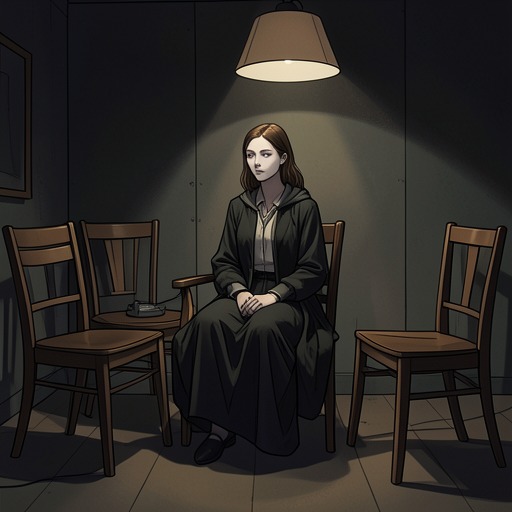
Loneliness as habit and survival
Luckiest Girl AliveLoneliness is both a refuge and a learned discipline for TifAni FaNelli. After Bradley resumes classes, she tries to increase her tolerance for being alone until isolation feels more dependable than other people; later memories complicate that strategy, showing how much she still values friendship, movement, and uncomplicated closeness.
Social Exclusion and Earlier Solaces
At Bradley, belonging is shaped by spaces as well as friendships. The Junior and Senior Lounge remains unfamiliar to TifAni even when she is old enough to enter: access depends on an exclusive code, and the lounge is not a place where marginalized students can comfortably spend a free period. Her isolation is therefore not simply a matter of having no one. She remembers being close to The Shark, though they lost touch after college, a separation she regrets. She also continues to sign up for cross-country each year. Running once brought her solace and a rare absence of self-doubt, before she turned it into something punishing that she used to impress Luke Harrison.
That contrast marks a loss of trust in her own sources of comfort. Running had offered an inward steadiness that did not depend on approval; later, its value becomes entangled with trying to please Luke. Likewise, TifAni’s social world includes real attachments, but those ties do not erase her sense of exclusion or guarantee that connection will last.
Loneliness as a Survival Practice
When Bradley reopens, TifAni dry-heaves every morning before school during the first month. She explains her response to herself as a need to build her tolerance for loneliness. The loneliness then becomes a constant companion, one she can depend on because it is the only thing she trusts to remain. The shift is not a recovery from isolation so much as an adaptation to it: by treating solitude as reliable, she makes its recurrence easier to withstand.
Her determination to work hard, made after Liam’s memorial service, accompanies this period of survival. In junior year, a school trip takes her to New York City, where she visits tourist landmarks she will later despise. The account places these outward activities alongside her inward practice of endurance: she keeps moving through school and its routines even while loneliness has become the condition she expects to accompany her.
The Desire for Safe Connection
TifAni’s reliance on isolation does not mean that she wants no contact. She privately finds crowded subway rides soothing because the warmth and nearness of other bodies can make her feel calm enough to fall asleep. That response sits beside her memory of wanting someone strong enough to hurt her but choosing not to; she believes Luke has failed to offer that safety, while Andrew Larson would not. The distinction is between proximity that feels involuntary and threatening and closeness that might be trusted, though TifAni does not yet know how to live securely within the latter.
With Andrew, she struggles to describe what she feels for Luke and says she is too tired to answer whether she loves him. Andrew turns her engagement ring as she holds his hand, making the unresolved question of marriage part of this scene of physical closeness. He later helps her settle and sleep. These moments do not undo her practiced loneliness, but they expose its limits: isolation has become dependable, while the possibility of being cared for remains difficult to name and accept.
Isolation and Survivorhood
TifAni also feels separated from the public meanings attached to other people’s deaths. She privately tells Andrew that she feels cheated because others died nobly, a privilege she believes she will never have. The thought links loneliness to survivorhood: she is not only apart from former friends and the Bradley community, but also from a story of noble victimhood that might make her suffering legible to others.
Across these episodes, loneliness is neither simple independence nor a condition she has freely chosen. It is an accommodation to exclusion and loss, made persuasive by its consistency. The narrative repeatedly sets that dependable solitude against evidence of connection she still values, leaving her survival strategy intact but visibly incomplete.